Daniel Fridljand
Software Consultant
TNG technology
Biography

Daniel Fridljand
Software Consultant
I am a driven software consultant with a strong academic background in mathematics, statistics, and bioinformatics. My passion for machine learning, software development, and statistics has led me to work on projects across diverse domains, including public health, genetics, and oncology. With three years of scientific software development experience and a first-author publication in a high-impact journal, I'm committed to leveraging computational skills to solve real-world challenges.
Download my resuméInterests
- Statistics
- Machine Learning
- Software Development
Education
- Msc in Mathematics, 2023 — University of Heidelberg
- BSc in Mathematics, 2020 — University of Heidelberg
Experience

Software Consultant
TNG TechnologyMunich, Germany
• Selected by the team to participate in Program Increment (PI) planning sessions, contributing to strategic planning and cross-team coordination
• Maintaining up CI pipelines based on Jenkins, particularly the OWASP scan
• Driving initiatives to address developer pain points across teams, reducing artifactory pipeline runtime from 8 hours to 30 seconds, minimizing wait times for feature developers using new libraries
• Creating synergies between feature teams working on different applications
• Navigating complex client projects with diverse stakeholder teams and legacy system constraints
• Full-stack development using Java 17, JBoss, Spring, Oracle DB, Gradle, JUnit, Docker, Podman, Jenkins, React, and TypeScript
• Co-organizing and contributing to the internal "AI Tool of the Week" blog series, providing weekly summaries of AI advancements including AI-assisted coding, agentic workflows, and multi-modal processing tools

Research Assistant
ETH ZürichBasel, Switzerland
• Lecture on Statistical Models in Computational Biology covering hidden Markov models, EM algorithm, Variational inference.
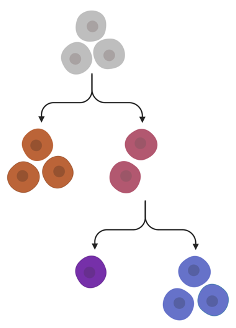
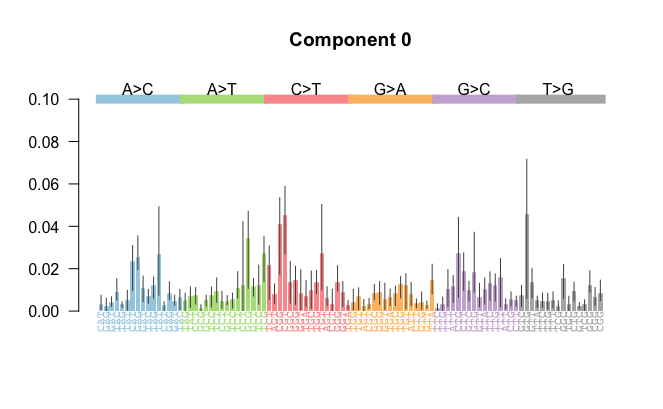
• I developed a novel Bayesian model using Hierarchical Dirichlet Processes (HDP) to analyze mutational signatures by integrating data from evolutionary trees. The model is designed to leverage the phylogenetic relationships between cancer subclones, assuming that evolutionarily closer cells exhibit more similar mutational signature activities. This non-parametric approach learns the number of signatures directly from the data while using the tree structure as a prior to guide the estimation of signature activities. A prototype was implemented and applied to single-cell sequencing data, allowing for the simultaneous discovery of signatures and the mapping of their activities across the cellular phylogeny. My blog post can be found here.

Research Assistant
Stanford UniversityPalo Alto, USA
• Analyzed the role of air pollution in the race-ethnicity to premature mortality causal chain, under Pascal Geldsetzer's guidance
• Spearheaded the project with minimal supervision, implementing comprehensive statistical analysis in R and synthesizing findings from 150 pertinent publications
•
Key achievements and detailed contributions
- Harmonized geospatial and tabular data on air pollution, mortality, population numbers, and orchestrated analyses of 10 different steps.
- Executed major revisions of the manuscript and conducted new analyses, including 15 new figures, within a strict 2-month deadline as part of the 'Revise and Resubmit' response.
- Developed an interactive Shiny web application to visualize 17-dimensional data, enhancing collaboration and data interpretation among the research team.
- Collaborated with seven Stanford co-authors to systematically gather and integrate critical feedback throughout various project stages, driving a significant enhancement in research quality.

Exchange student
Yale UniversityNew Haven, USA

Research Assistant
European Molecular Biology LaboratoryHeidelberg, Germany
• Supervised by Wolfgang Huber and Nikos Ignatiadis.
• Designed an innovative stratification algorithm that automatically selects and ranks informative covariates, enhancing robustness to noisy and unknown features in real-world data.
• Led the project from inception to dissemination, presenting results at seven scientific events, including invited talks at Yale University, University of North Carolina at Chapel Hill, and a competitively selected oral presentation at DAGStat 2022 before 100 scholars.
• Applied IHW-Forest in a large-scale production analysis of 16 billion genetic tests, utilizing 11 covariates to boost the discovery of significant SNP-histone associations by over 30% compared to alternative methods.
• Incorporated concepts from selective inference, machine learning, and empirical Bayes.
• Served as a peer reviewer for Bioinformatics Advances and Cell Biology.

Master Student in Mathematics
Heidelberg UniversityHeidelberg, Germany
• Thesis advisor: Dr. Wolfgang Huber (EMBL), Prof. Dr. Jan Johannes
• Thesis title: Better Multiple Testing: Using multivariate co-data for hypotheses
• Course work on high-dimensional statistics, Probability theory, nonparametric and parametric statistics, Algebraic Topology.

Exchange Student
Hebrew University of JerusalemJerusalem, Israel
Bachelor Student in Mathematics
Heidelberg UniversityHeidelberg, Germany
• Thesis advisor: Prof. Dr. Jan Johannes
• Thesis title: Online Estimation of the Geometric Median in Hilbert Spaces
• Thesis summary: Mathematically analyzed a novel, efficient algorithm for estimating the geometric median in Hilbert spaces, proving its almost sure consistency, convergence rate, and asymptotic normality.
• Minor in Computer Science
• Coursework in Statistics, Algorithms and Data Structures, Linear Algebra, Abstract Algebra
Publications
Disparities in air pollution attributable mortality in the US population by race/ethnicity and sociodemographic factors
Pascal Geldsetzer, Daniel Fridljand, Mathew Kiang, Eran Bendavid, Sam Heft-Neal, Marshall Burke, Alexander H. Thieme, Tarik Benmarhnia
Nature Medicine · July 1, 2024
In the US between 2000 and 2011, over half of the gap in mortality between Black and non-Hispanic White adults can be explained by the fact that Black adults are, on average, more exposed and more susceptible to air pollution than non-Hispanic White adults.